

Updated

Here’s the confusion we hear most in consultations: patients ask for “filler” when what they actually want is a slow, structural return of youthful fullness — which is closer to what Sculptra does.
Getting sculptra vs filler wrong doesn’t just waste money; it can leave a face looking either flat or overfilled. So let’s separate the two clearly, from a working injector’s point of view.
Quick Answer (TL;DR): Dermal filler (usually hyaluronic acid) adds instant volume you can see the same day and is reversible. Sculptra is a collagen stimulator (poly-L-lactic acid) that works gradually over weeks to rebuild your own collagen, with results that build over 2–3 sessions and often last around two years.
Filler is best for defined shaping and quick contour; Sculptra suits diffuse, all-over volume loss. Many patients benefit from a thoughtful combination — which is exactly why an in-person assessment matters more than the product name. Results vary by individual.
- Sculptra 1 vial (first visit): ₩990,000
Sculptra vs Filler at a Glance
The fastest way to understand the choice is side by side. The bottom line: they are not competitors so much as different tools for different problems.
| Factor | Sculptra | Dermal Filler (HA) |
|---|---|---|
| Main ingredient | Poly-L-lactic acid (PLLA), a collagen stimulator | Hyaluronic acid (a sugar molecule your body already makes) |
| How it works | Prompts your skin to build its own collagen over time | Physically fills the space it’s injected into |
| When you see results | Gradual — weeks to a few months | Immediate, same-day |
| Sessions | Often 2–3, spaced several weeks apart | Usually 1, touch-ups optional |
| Typical longevity | Often up to ~2 years (varies) | Often 6–18 months, product-dependent |
| Reversible? | No direct “eraser” | Yes — HA can be dissolved with hyaluronidase |
| Best for | Diffuse, all-over volume loss and skin quality | Precise shaping: chin, jawline, cheeks, lips |
How Each One Actually Works
Understanding the mechanism removes most of the marketing noise. One is a filler in the literal sense; the other is a biostimulator.
Sculptra: rebuilding, not filling
Sculptra is poly-L-lactic acid (PLLA) — a biocompatible material that has been used in medicine for decades. It is approved by the U.S. FDA for facial volume restoration (see the U.S. FDA’s device information for regulatory details). Rather than sitting in your tissue as a bulk, the microparticles gently signal your skin to produce new collagen. Regulatory approval status refers to the U.S. FDA and may differ by country.
Because it relies on your own biology, the change is subtle and cumulative.
That’s why patients don’t walk out “done” — the improvement in firmness and volume builds over the following weeks. In our experience, this makes it a good fit for people who want to avoid an obviously “worked-on” look.
Hyaluronic acid filler: instant structure
Hyaluronic acid (HA) filler does what the name suggests — it occupies space to create immediate volume and definition. It’s the go-to for a sharper jawline, a projected chin, or lifted cheeks. A major practical advantage is reversibility: if you or your injector aren’t happy, HA can be dissolved.
If you’re still deciding between adding volume and improving skin quality, our Skin Booster vs Filler: Which Should You Get First in Korea? guide walks through that sequencing question in detail. For the mechanics and safety of HA specifically, see our Dermal Filler in Korea guide on why the injector matters more than the product.
Does Sculptra Lift the Face?
Short answer: not the way a thread lift or energy device “lifts.” Sculptra restores volume and structural support, and by refilling areas that have hollowed with age, it can create the visual effect of a more lifted, refreshed contour. It does not physically pull tissue upward. For genuine tightening driven by ultrasound or RF energy, that’s a different category — compare those in our HIFU vs Ultherapy in Seoul comparison.
Realistically, a face that has both descended and deflated may do best with a combined plan — volume restoration plus a tightening modality. That’s a judgment call best made in person, not from a photo.
First visit to Aive?
Planning Botox or filler in Seoul?
🎁 First-visit bonus: a $100 post-treatment LED & hydration session, included with your first treatment.
What are you considering?
When are you in Seoul?
Answered in English. Prefer a form? Send us a note below ↓
Cost, Value, and the “4 Vials” Question
Bottom line on money: there is no single honest number, and anyone quoting one without seeing your face is guessing. Sculptra is priced per vial, and how many vials you need depends on how much volume has been lost.
A commonly cited full-face plan involves multiple vials across sessions — you’ll see figures like “4 vials” discussed online — but the right amount for you is a clinical decision.
- Sculptra is usually more cost-effective over time if you have widespread volume loss, because results tend to last and reduce touch-up frequency.
- Filler can be more economical for a single, targeted area (e.g. just the chin).
- We describe general ranges during consultation and never lock in a figure before assessing you — Korea’s competitive market and Aive’s transparent pricing (Korea’s 10% VAT refund for cosmetic procedures ended on January 1, 2026, so international patients now pay the 10% VAT, and prices at Aive Clinic are listed before VAT) both work in your favor.
For a broader sense of what aesthetic procedures cost here, our complete 2026 cost sheet for foreigners is a useful starting reference before you fly in.
Who Each Treatment Suits — and Who Should Wait
An honest guide has to include when not to do something. Not everyone is a candidate, and a consultation determines suitability.
What is the best age for Sculptra?
There’s no strict age, but Sculptra tends to make the most sense once gradual collagen loss and mild-to-moderate volume decline have begun — commonly from the late 30s onward. Younger patients with good volume rarely need it. Because it works with your own collagen response, people who still have healthy skin turnover often respond well.
When filler may be the wrong first move
If your concern is generalized flatness rather than one under-projected feature, stacking lots of HA filler can look puffy. In those cases we may recommend a collagen-stimulating approach first. Side effects for both — swelling, bruising, tenderness, and rarer nodules — are uncommon and are explained to you beforehand so you can make an informed choice.

Why This Decision Is Really About the Injector — The Aive Difference
Bottom line: the product on the tray matters far less than the hands and eyes deciding where and how much. This is where a factory-style, assembly-line clinic and a physician-led one genuinely differ.
- Dr. Park performs the injections himself — no shadow doctor. He serves as a Key Doctor for both the QT-fill (hyaluronic acid filler) and Olidia (collagen-stimulating) product lines, and has lectured to a forum of 20 aesthetic physicians on lower-face contouring technique. That dual expertise across both filler and biostimulators is exactly what a Sculptra-vs-filler decision calls for.
- A private 1:1 VIP consultation inside a spacious ~120-pyeong (roughly 400㎡) clinic, where your facial structure, bone shape, and skin elasticity are assessed individually — not slotted into a fixed “shots per zone” package.
- A 3-stage pain-management system so discomfort during injection is minimized and managed, with the plan explained before we begin.
- Aesthetic sensibility tuned by nationality — many international patients means we understand the difference between the bolder, more sculpted contour some North and South American patients prefer and the softer, more natural balance many Asian patients ask for.
Patient feedback reflects this hands-on approach: Aive holds a 9.5 rating from 262 reviews on Gangnam Unni and 9.6 from 92 reviews on Yeoshin Ticket (platform figures as published on those platforms; individual experiences vary). You can read more of what patients say in our Aive Clinic Seoul reviews roundup.
Frequently Asked Questions
How much do 4 vials of Sculptra cost?
Sculptra is priced per vial and total cost depends on how many vials your face actually needs, which is a clinical decision. A multi-vial full-face plan is common, but the per-vial price is on Aive’s monthly price list, and the number of vials is decided after assessing you — Korea’s 10% VAT refund for cosmetic procedures ended on January 1, 2026, so international patients now pay the 10% VAT, and prices at Aive Clinic are listed before VAT. Prices vary by clinic and plan.
What is the best age for Sculptra?
There’s no strict cutoff, but Sculptra tends to suit patients once gradual collagen and volume loss have begun, commonly from the late 30s onward. Because it stimulates your own collagen, people with reasonably healthy skin turnover often respond well. Suitability is confirmed in a consultation, not by age alone.
Does Sculptra lift the face?
Not in the mechanical sense of a thread lift or energy device. Sculptra restores lost volume and structural support, which can create the visual impression of a more lifted, refreshed contour, but it does not physically pull tissue upward. Faces with true sagging may need a combined plan.
Is Sculptra really worth the money in Korea?
For patients with diffuse, all-over volume loss, many find the gradual, longer-lasting results good value because touch-ups are less frequent. For a single targeted area, filler may be more economical. Value depends on your specific concern, so results vary by individual and are best assessed in person.
Medical disclaimer: This article is educational, and any procedure is administered by licensed doctors. It is not a substitute for a personal consultation. All aesthetic procedures carry possible side effects, which we explain beforehand; individual results vary. Regulatory approval status refers to the U.S. FDA and may differ by country.
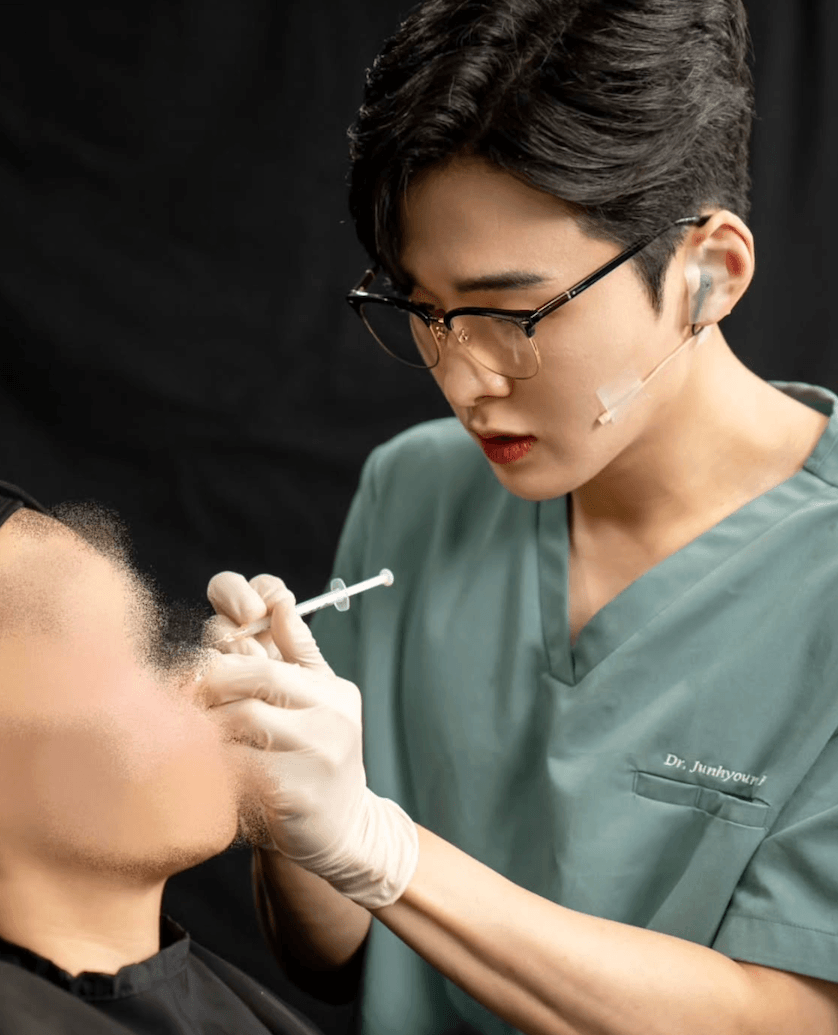
Dr. Junhyung Park is an aesthetic physician leading Aive Clinic in Sinsa-dong, Gangnam, Seoul, specializing in non-surgical facial contouring, stem-cell anti-aging, and culturally customized treatments for international patients. He is a certified Key Doctor (QT-fill, Ollidia, Sinclair) and Academic Director of the Korean Clinical Aesthetic Medicine Society, and regularly lectures at medical conferences to train other physicians. A former US 8th Army medical interpreter, he supports patients in English, Japanese, and Chinese.
 Dr. Junhyung Park, founderAcademic Director, Korean Clinical Aesthetic Medicine Society★ 5.0 · 688 Google reviews📍 Sinsa Station Exit 8
Have a question? Get a personalized answer.
Tell us a little and our medical team replies within 24 hours — no obligation.
What patients say
“…a consultation with the doctor to actually review a full treatment plan that made sense for me, no pressure to choose to do more or upsell.”— Marisa G., Google review
“It’s foreigner-friendly, and I was able to get my consultation fully in English.”— Lia, Google review
“The consultation was thorough and honest, they really took the time to understand what I wanted and explained the procedures clearly without any pressure.”— Mi n, Google review
Visit us
📍 K-Tower 5F, 119 Dosan-daero, Gangnam-gu, Seoul · Sinsa Station (Line 3 / Shinbundang) Exit 8
🕐 Mon, Tue, Fri 10:00–20:00 · Wed, Thu 10:00–19:00 · Sat 10:00–16:00 · Closed Sun & public holidays
💬 Consultations in English · Directions →
Planning Botox or filler? Get a doctor’s plan before your trip.
Get my plan →